Celebrations with Character
How to Plan an Intimate Wedding with Character
Plan an intimate wedding with a cohesive guest list, an inviting venue, and a relaxed pace. Practical ideas for celebrating with intention without taking on unnecessary stress.
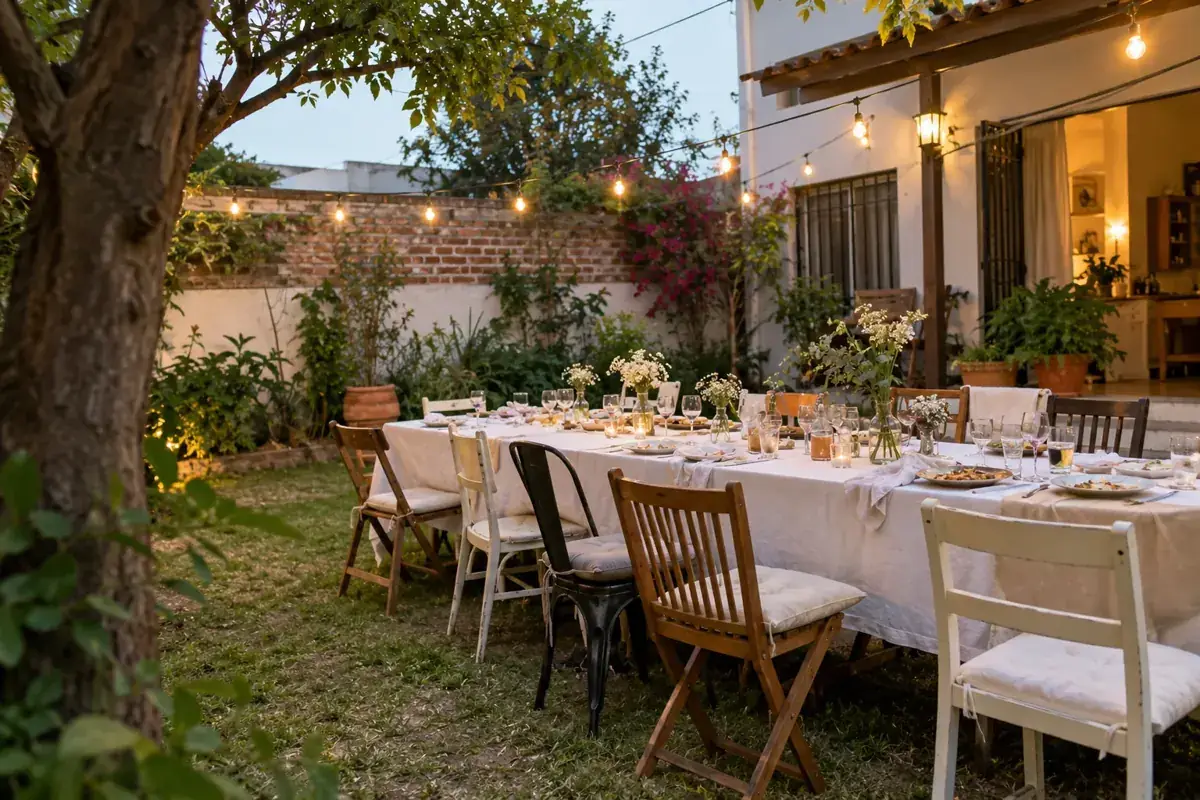
An intimate wedding requires a coherent guest list, a space proportioned to the group, and a schedule with pauses; it is not defined simply by having a small headcount. It is characterized by the opportunity to converse, spend meaningful time together, and make choices that reflect the couple. It can be a long meal, a ceremony followed by dinner, or a simple celebration in a meaningful setting. The challenge is to avoid burdening this smaller format with all the obligations of a much larger event. This guide focuses on organizing the celebration: choosing the scale, communicating the guest list, and creating an intimate experience. Legal or ceremonial requirements should be verified separately with the appropriate officiants and authorities.
Describe the experience before counting guests
Start with a concrete conversation: how do you want to remember that day? Perhaps you envision sharing a single table, enjoying a relaxed afternoon, or celebrating with music until a certain hour. Write down three observable priorities, such as having enough time to greet each person, enjoying a seated meal, and setting aside private time together at the end. These priorities will help you decide what to embrace and what to set aside when ideas come up from family or vendors.
Avoid defining your wedding solely by what it will not include. Instead of calling it a scaled-down version of another kind of celebration, describe what you actually want to offer. A dinner for twenty can have a completely different rhythm than a larger party, but numbers alone do not guarantee intimacy. The space, the table layout, and the density of activities matter just as much as the headcount. Keep your priorities front and center to evaluate every new idea.
Build a list you can explain with respect
Agree on who will be part of the celebration and establish clear criteria for plus-ones or family groups. There is no universally right guest list. The essential thing is that both of you understand the scope before sending invitations. If you both informally add names along the way, an event planned for a small group can grow without anyone making a deliberate decision. Draft a list, review it together, and distinguish tentative ideas from invitations that have already been sent.
When someone asks why the guest list is not larger, you can explain that you chose an intimate celebration with a specific group. You do not need to compare relationships or justify every absence. Avoid promising a second party if you do not want one or have not planned for it. If a sensitive conversation is needed, the partner with the closer relationship should handle it privately, without pointing to the other partner as the reason for the boundary. Early clarity is usually far kinder than an ambiguous invitation.
Read more: How to plan an intimate, stress-free engagement celebration.
Choose a venue scaled to the group size
Visit the venue thinking about how guests will feel inside the space, not just how it will look in photos. An overly large room can make a small group feel scattered; a cramped dining area can make it hard to move or converse. Look at where the table, welcome area, coat check, and planned activities will be located. Ask what furniture the venue provides and what additional rentals you truly need. An intimate wedding does not need to duplicate a setting designed for hundreds of guests.
Test the acoustics and flow of the room as well. If you want conversation during the meal, pay attention to how a voice carries across different spots. If any guests have accessibility needs, walk the route and talk directly with them about what would be helpful. Do not describe a venue as accessible merely because it has a wide entrance. For an outdoor celebration, establish a realistic backup plan before finalizing the schedule, with capacity and conditions that work for the same group.
Design a comfortable pace with space between moments
A smaller schedule can easily become overcrowded if it includes too many back-to-back activities. Select the moments that truly matter and leave room to chat, eat, and move between spaces. One possible flow is a welcome reception, central moment, meal, toasts, and open time; this is simply an example, not a mandatory structure. Confirm durations with your vendors and factor in transitions, which often take longer than they appear on an itinerary.
Decide who will cue when it is time to move to the next part of the event. It should not fall on the couple to constantly check the clock. If toasts are planned, invite speakers ahead of time and agree on a reasonable length without making it feel like an obligation. An intimate event allows for spontaneity, but it still needs a few ground rules so that one speech does not delay dinner or transportation. The best pause is one planned into the experience, not one that occurs because of poor coordination.
Questions for your caterer or chef
Before signing, clarify the details that affect both cost and guest experience:
- Does the price include staff, setup, tableware, linens, and breakdown?
- What is the minimum guest count, and what is your maximum capacity?
- Can you accommodate dietary restrictions or food allergies?
- How far in advance of the event do you need the final guest count?
- What terms apply if the date changes or the guest count decreases?
Keep these written responses alongside your quote. If any condition is unclear, do not assume it is agreed upon until confirmed.
Focus your budget on the lived experience
Revisit your priorities before adding decorative items. If you value a single long table and comfortable conversation, it may be wiser to invest in good service, comfortable chairs, and lighting rather than an array of party favors. Compare quotes with the same scope, and ask that each service be clearly outlined: hours, staffing, setup, and included equipment. A standalone price tag does not reveal whether two proposals actually offer the same value.
Do not assume that fewer guests automatically means a minimal budget. Some services carry fixed costs that change very little with group size. Nor should you feel pressured to spend more per person simply because you can. Set your own spending limit and evaluate every addition based on its practical value. For DIY projects, factor in the time, transport, and setup required. If an idea requires working through the entire day before, it may not align with the calm atmosphere you want. Your budget should support your vision, not impose an aesthetic that does not suit you.
Read more: How to Organize a Civil Wedding Celebration.
Send an invitation that reflects the format
Let guests know that this is an intimate celebration and outline what they need to attend: date, time, venue, who is included in the invitation, and how to RSVP. If the gathering centers around a shared meal, mention it so guests can time their arrival accordingly. If there is a dress code, explain the intent in clear, relatable terms. Avoid formal labels simply because they sound traditional if they run counter to the atmosphere you are creating.
Convite can help you create QR code invitations and organize guest entry according to the features you select. For a small group, there is no need to make the welcome rigid: simply explain how to bring along the invitation and who will be there to help with questions. Keep your RSVPs managed separately; do not assume that sending an invitation guarantees an affirmative response. The tool should support your chosen format without adding unnecessary steps to your guests' experience.
Protect the couple's time on the day of the event
Delegate tasks you do not need to handle personally: meeting vendors, greeting arriving guests, checking the table setup, or packing up at the end. Assign each task to a specific person with a contact number, rather than relying on a vague expectation that someone will help. If a close friend or family member takes on a role, make sure they still have time to enjoy the gathering. A small guest list does not mean everything will manage itself.
Prepare a brief sheet with schedules, designated coordinators, and settled pending decisions. Then agree on which matters warrant interrupting the couple and which can be resolved by the designated coordinator. When wrapping up the celebration, have a plan for who will clean up and how anyone who needs a ride will get home. A thoughtfully curated intimate wedding requires neither perfection nor an extraordinary schedule. It needs coherent decisions and enough room to be present. If in the end you can genuinely share time with those you invited, the format will have served its purpose.
From reading to action
Plan your celebration step by step
Check off what you've already sorted out. This checklist is saved only in this browser, without sending data or creating an account. It is not an app feature.
0 of 6 tasks completed
Before finalizing your plan
How many people make an intimate wedding?
There is no single number. Define a guest count and format that allow for the closeness you seek, rather than chasing a label.
Does a small wedding always cost less?
Not necessarily. There are fixed costs; review the scope of each service and the limit you set for yourselves.
How do I choose the menu for an intimate wedding?
Start with the format: seated dinner, lunch, or cocktail-style. Then define how many courses you want to serve and what dietary restrictions need to be accommodated. A concise, well-executed menu usually works better than an overwhelming number of options.
Can you host an intimate wedding at home?
Yes, if the space allows everyone to sit or move around comfortably and if you have a plan for the kitchen, restrooms, and the day's flow. If you haven't chosen a venue yet, review how to choose an event venue.
Sources and helpful reading
Practical guide from the editorial team. Examples are for guidance; adapt decisions and requirements to your event.
- Convite: Product Information: The features described were verified against product documentation; planning methods are editorial recommendations.