Guides for hosts
How to calculate drinks for an event with clear assumptions
Calculate drink quantities for your gathering using a practical example, non-alcoholic options, container sizes, and a service plan that eliminates guesswork.
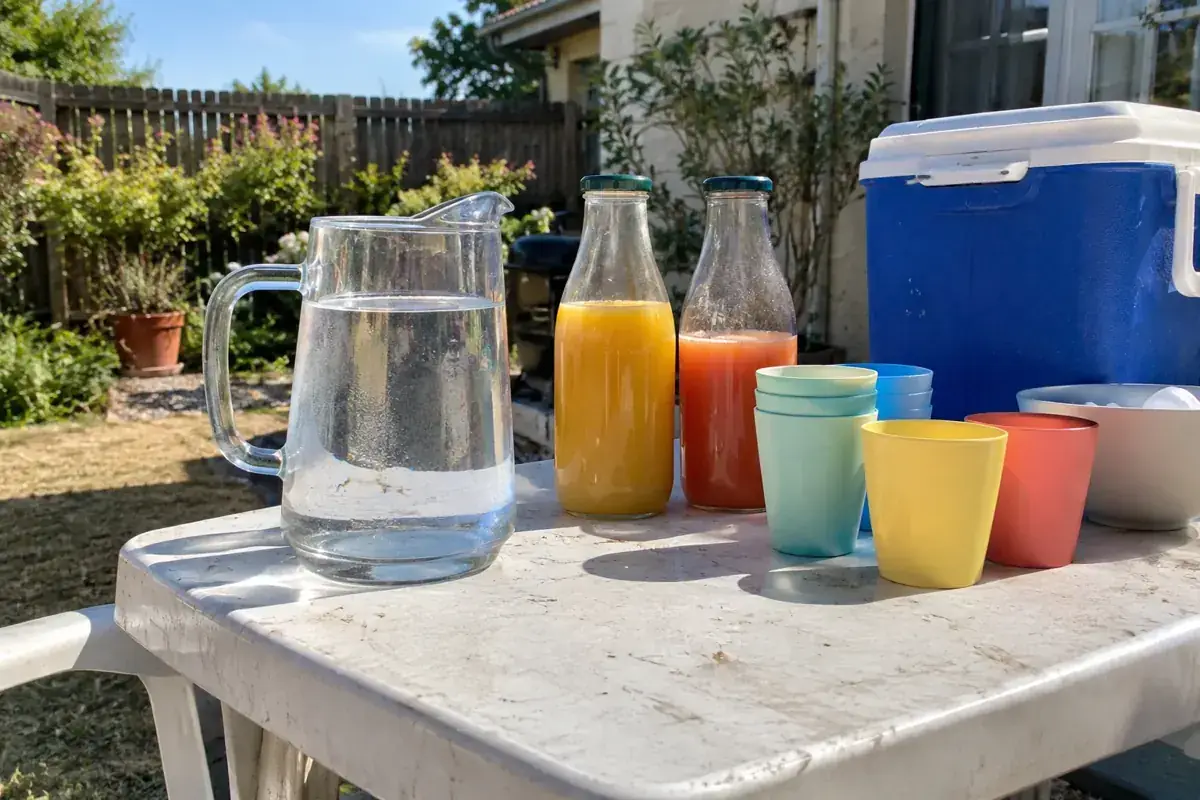
To calculate drinks for an event, start by determining how many guests will attend, how long the gathering will last, and what type of service you'll have. Calculating drinks isn't about multiplying a universal number by your guest count. A two-hour lunch, a hot afternoon, and a party with continuous service all have different needs. Furthermore, buying enough won't help if drinks arrive late, can't be kept at the right temperature, or if no one can find a cup. This guide offers an operational estimate with clear assumptions and a practical shopping example. It does not prescribe how much anyone should drink, nor does it encourage alcohol consumption. The goal is to plan your supplies, gather preferences without pressure, and double-check what you can realistically store and serve.
Start with guests, duration, and format
Write down your expected guest count, the planned duration, and whether food will be served. Also describe the setting: indoors or outdoors, access to running water, refrigeration space, and whether you can restock mid-event. Don't turn these variables into an artificial, rigid formula. They simply explain why your estimate will differ from another occasion. If the group has gathered before, a simple log of past consumption and leftovers can be far more helpful than a one-size-fits-all rule found online.
Ask about preferences simply: water, non-alcoholic drinks, and any other planned options. You don't need to ask why someone picks a particular drink, nor should you infer reasons regarding health, religion, or pregnancy. Offer equivalent alternatives in terms of presentation and accessibility. If alcohol will be served, its presence shouldn't pressure anyone to drink, nor should it crowd out water or non-alcoholic options. Comply with all applicable venue and local regulations; do not treat this guide as legal advice.
Build an estimate you can adjust
One way to begin is by defining a hypothetical number of servings per person for your format, then multiplying that by the size of the cups you'll actually use. For instance, if you plan for forty guests, two servings of a specific drink, and 250-milliliter (approx. 8 oz) cups, your calculated need for that beverage would be 20 liters. This is purely a mathematical planning exercise, not a consumption recommendation or a sufficient fluid intake for the entire event. Water and other options should be planned based on your specific context.
Review every assumption before you head to the store. Do those two servings apply entirely to that single drink, or will they be split across several? Will cups be filled to the brim? Will there be ice? Don't use ice as an excuse to arbitrarily cut down the water you provide. If you're uncertain, map out a low, base, and high scenario, and decide how much can stay unopened as a reserve. The value of this calculation lies in making your decisions visible, not in promising pinpoint accuracy.
Read more: How to organize a buffet that's easy to serve and enjoy.
A formula with assumptions you can tweak
A useful estimate relies on a simple formula with written assumptions: guests times event duration times expected consumption per hour. You define this last factor based on the style of your gathering and what you know about your group, which is why it's left blank in the template.
| Beverage | Consumption assumption | Containers needed | Confirmed purchase |
|---|---|---|---|
| Water | |||
| Sodas | |||
| Beer | |||
| Wine or other beverage | |||
| Ice |
If the result seems too high or too low, review your assumptions first rather than just tweaking the total. That way, you can adjust a single variable without recalculating everything from scratch. To coordinate your drink purchases alongside the food, check out our guide on how to organize a buffet.
Turn liters into an actual shopping list
Once you've estimated volume, check container sizes and case quantities. If you need 20 liters of a drink and each bottle holds 1.5 liters, thirteen bottles equal 19.5 liters and fourteen equal 21. That rounding needs to show up on your shopping list. Also check whether the vendor sells individual units or full cases only. Don't confuse the volume of a single bottle with that of an entire pack, and never compare prices without converting them to the same unit.
Consider storage, transport, and ease of serving. A bulk container might offer a great price per liter, but it could be cumbersome to chill or handle in your space. Multiple small bottles might generate more waste or require extra cleanup. Choose based on your practical resources, not just unit cost. Set aside the initial serving batch from your unopened reserve, and only count on returns if the retailer guarantees return policies in writing. Never assume you can return leftover unopened stock.
Plan cups, ice, and a straightforward beverage station
Count your drinkware and decide whether to use reusable, returnable, or disposable cups based on what's available. If guests can label or identify their cups, you might cut down on waste, but never force anyone to reuse a dirty cup. Plan how used cups will be cleared and washed as needed. Sourcing cups is a completely separate task from calculating liters, and it deserves its own line on your shopping list and task roster.
Place water where it's easy to spot, leaving plenty of room for guests to pour without blocking the food line. Label drinks clearly, especially when they look similar. If you're using ice in drinks, it must come from safe drinking water and be handled hygienically; don't confuse it with ice used to chill cans in a cooler. The WHO highlights the use of safe water and raw materials among its core food safety principles. Check with your vendor if any specialty drink requires specific storage conditions.
Share restocking duties and avoid social pressure
Designate someone to check the drink station at set intervals, along with a backup helper if the event runs long. They should know where the extra stock is kept and what can be opened. You don't need to monitor what each guest drinks at a casual gathering; just keep an eye on stock levels and make sure choices are accessible. If a drink runs out, casually suggest an alternative. A curated, well-maintained drink station is usually far more welcoming than a cluttered table of bottles with no cups or signage.
If alcoholic drinks are served, avoid drinking games or peer pressure, and never treat high volumes as a goal. Make it effortless for anyone to choose a non-alcoholic drink without having to explain themselves. Safe rides home must also be arranged responsibly according to local conditions. Never assure someone they're safe to drive based on how many drinks you recall serving them; that kind of assessment has no place in a shopping estimate.
Read more: How to budget for an event without losing sight of what matters.
Use wrap-up notes to improve your next run
At the end of the event, log what was purchased, what was opened, and what remained sealed. You don't need to track individual consumption. If you offered several drinks, notice which ones were popular and when. A drink might be left over simply because it was tucked away or because guests didn't know what it was. This information helps you fine-tune both selection and station layout next time. Discard or store opened batches according to food safety guidelines, not simply because there's still liquid left.
Keep brief context notes alongside your numbers: total duration, actual attendance, menu, and general conditions. That way, you won't blindly apply numbers from a short dinner to a long outdoor party. Next time, simply update your assumptions and recalculate. Good records curb panic buying, help you negotiate quantities with suppliers, and free up attention to focus on your guests. The goal is reliable availability and choice, not hitting an arbitrary consumption target.
Non-alcoholic options so everyone has something to pour
A drink station with fresh water, soft drinks, and a thoughtful alcohol-free alternative ensures no one feels left out. Here are a few practical ideas:
- Aguas frescas: prepare them ahead of time and clearly label each flavor.
- Iced tea or cold brew: great for afternoon gatherings.
- Bottled or canned sodas: easy to serve, chill, and restock.
- House specialty mocktail: give it a clear name alongside its non-alcoholic recipe.
Jot down how much of each option remains once the event ends. That record will be your best guide for your next shopping run. For your overall event finances, check out our guide on budgeting for an event.
Review the list as if you had to carry it yourself
Before paying, translate your order into physical loads: how many boxes, bottles, dispensers, and bags of ice will you actually need to carry? Make sure they fit in your vehicle and that you know where they'll go when you arrive. Add bottle openers or serving utensils to your list only when containers require them, and verify you have them on hand. A flawless volume estimate can fall apart over simple logistics: the extra stock was stored too far away, there wasn't enough fridge space, or nobody knew which bottle to open first. Nailing down these details ensures your calculated supply is truly ready to serve, rather than just looking good on a store receipt.
From reading to action
Check drinks and supplies
Check off what you've already sorted out. This checklist is saved only in this browser, without sending data or creating an account. It is not an app feature.
0 of 8 tasks completed
To turn your menu into an organized shopping plan, use our party food calculator: compare three guest scenarios, subtract existing stock, and review pack sizes and surpluses.
Before finalizing your plan
Is there a universal formula for drinks per person?
No. Duration, food, weather, and preferences all change the outcome. Use transparent assumptions and refine them using your group's past experience.
Does the 20-liter example cover all beverages for the event?
No. It simply demonstrates the math for one specific beverage. It does not prescribe consumption or replace planning for water and other choices.
Should I only buy what's most popular?
You can prioritize favorites, but always keep water and non-alcoholic options clearly visible. Inquire about preferences without demanding personal explanations.
What should I do with leftover drinks?
Check if leftovers are shelf-stable items like unopened sodas or bottled water, and store them in their packaging. Opened or perishable beverages shouldn't be saved for another event. Take note of what was left over to adjust your next purchase with real data.
What if drinks run out earlier than expected?
Have a backup plan: know the nearest store, confirm if someone can do a quick run, and decide ahead of time which drink can substitute for another. If restocking falls on one person, designate a backup from the start.
How do I compare what was bought with what was actually consumed?
Count what's left at the end of the event, keeping opened and unopened containers separate. Using those figures, compare your purchase against your starting assumptions and tweak only the variable that diverged, such as duration or actual headcount.
Sources and helpful reading
Practical guide from the editorial team. Examples are for guidance; adapt decisions and requirements to your event.
- WHO: Five Keys to Safer Food: Reference limited to the use of safe water and raw materials. Calculations are our own editorial examples.