Ideas for Meaningful Gatherings
How to plan an intimate, stress-free engagement celebration
Plan an engagement celebration with a clear format, guest list, and budget, mindfully handling family conversations and the couple's own pace.

An engagement party is a celebration to share the news with loved ones, and it can be as simple or elaborate as the couple chooses. Celebrating an engagement can be a straightforward way to share significant news. It doesn't need to turn into a second wedding or rush decisions that the couple hasn't made yet. The format can range from an intimate meal to a larger gathering, depending on your desires, budget, and relationships. This guide helps you decide what you want to communicate, who to invite, and how to organize the get-together without letting other people's expectations take over. It focuses on practical agreements and considerate dynamics, leaving room for different family structures, budgets, and ways of celebrating.
Get on the same page about what you want to share and what you'd rather keep private
Before speaking to the group, discuss the purpose of the gathering together. Do you want to announce the engagement, bring two families together, or simply celebrate with friends? Clarify what information is confirmed and what you prefer to keep private. You don't need a wedding date, venue, or style finalized just to share the news. You can prepare a polite answer for predictable questions: “We're still deciding; as soon as we have something confirmed, we'll let you know.”
Agreeing on that boundary between the two of you prevents one partner from promising details that the other doesn't want to announce. It also helps whoever is hosting or organizing, if it isn't you. Don't assume a family gathering must include speeches, rituals, or discussions about money. If you want any of those elements, choose them intentionally and define their scope. The celebration can honor the significance of the moment without turning every guest question into a decision that must be resolved that afternoon.
Choose a format proportional to the moment
A meal at home offers intimacy, but it requires prep work and clean-up. A restaurant can reduce the workload, though you need to review reservations, food minimums, schedules, and policies. A rented venue opens up other possibilities at the cost of more coordination. Compare formats based on experience and effort, not just appearances. If the goal is conversation, ensure adequate seating and a compatible environment. If there will be a brief announcement, consider acoustics without turning the entire gathering into a presentation.
Define the duration and what will be served so no one expects something else. “Coffee and dessert to celebrate” communicates a very different format than an “engagement dinner.” There is no need to justify a simpler gathering. If the budget is tight, scaling back the guest list or duration is usually clearer than trying to replicate a large party with insufficient resources. Save your energy to enjoy the moment; organizing a meaningful celebration doesn't require the couple to spend the entire time managing logistics.
Read more: How to budget for an event without losing sight of what matters.
Engagement formats by group size
The format shapes the conversation. These options serve as a starting point; none are mandatory.
- Intimate meal at home: ideal for a close group; requires planning the food and the wrap-up.
- Brunch or coffee: flexible timing and less pressure for toasts; make sure to mention if a full meal is included.
- Dinner at a restaurant: less kitchen work; review the reservation, menu, and payment method before sending invitations.
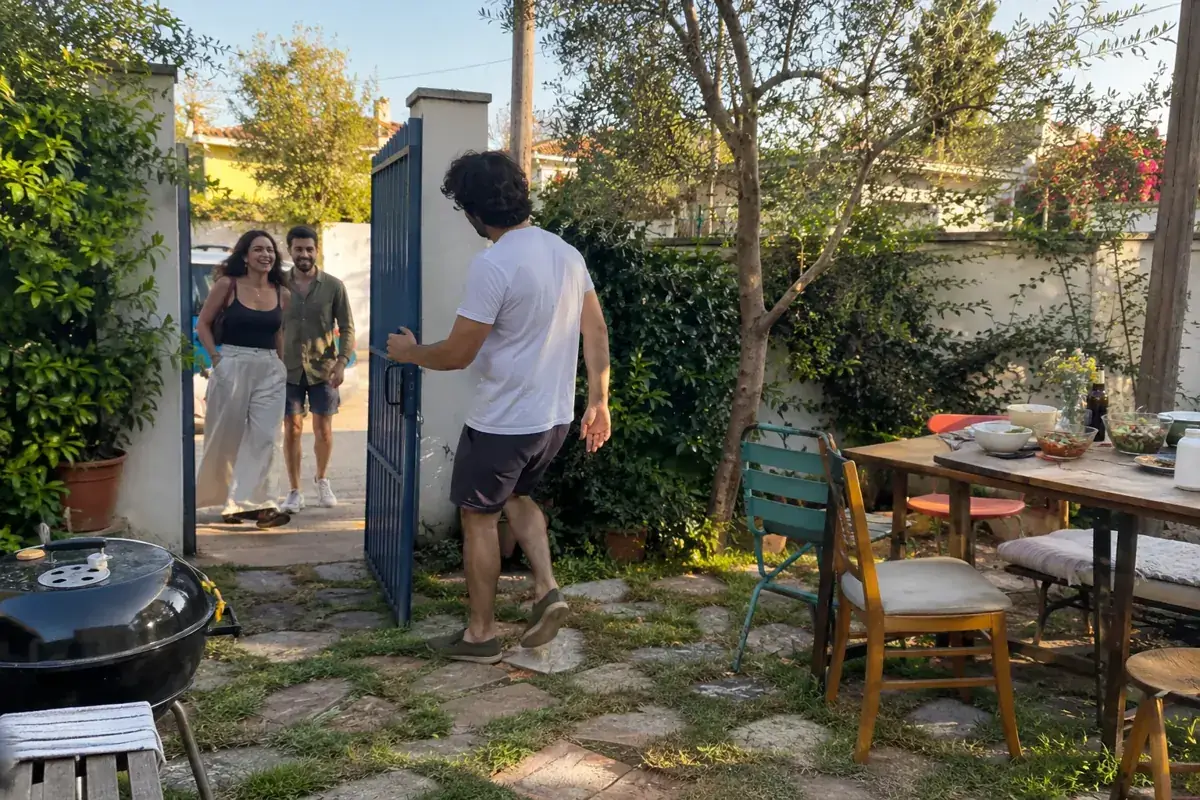
- Garden or patio gathering: great if the weather cooperates; keep a backup plan in case conditions change.
Choose the format based on the number of people you genuinely want to bring together, not on what you've seen at other celebrations. If your plan is a dinner, be sure to also check out the guide on dinner among friends.
Build the guest list through agreements, not forced equivalencies
Decide which circle you want to gather and why. There won't always be an equal number of people from each side, and that doesn't mean the guest list reflects an emotional imbalance. Think in terms of genuine bonds, venue capacity, and the comfort of the format. If there will be guests who don't know each other, a manageable group size makes conversation easier. Clarify plus-ones and avoid letting the guest count drift due to informal invites that no one coordinated.
Take delicate relationships into account without turning your planning into a showcase of conflicts. You can opt for separate moments or a layout that minimizes tension, if that suits your needs. Don't pressure anyone into a public reconciliation simply because the occasion “deserves it.” Likewise, do not share private information to justify why someone wasn't invited. A clear, respectful guest list is communicated simply, without turning your invitees into arbiters of family decisions.

Clarify budget and contributions before booking
If the couple is hosting, define how much you want to spend and the priorities for the gathering. If someone offers to cover part of the cost, discuss what that includes and whether they expect a say in the planning. A financial contribution shouldn't automatically be interpreted as control over the guest list or format. It is far better to clarify expectations before booking a service than to debate them after the deposit is paid.
Include food, drinks, transportation of supplies, service, and cleanup where applicable. If the bill will be split at a restaurant, let guests know in advance and explain how it will work. Don't present the gathering as a hosted event only to reveal a charge at the end. Nor is it necessary to order party favors, elaborate arrangements, or specific outfits to make the gathering special. You can choose one meaningful detail and keep the rest simple. Consistency between your message, budget, and the actual experience prevents unnecessary pressure for everyone.
Plan a welcome that fosters conversation
Think about how people from different circles will meet. A brief introduction mentioning an everyday detail can spark conversation without oversharing private matters. Avoid seating someone by themselves just to achieve a symmetrical layout. Mixing groups can work well if everyone feels comfortable, but you don't need to separate people from their plus-ones. Provide space for conversations to form naturally.
If there will be words of thanks, agree on who wants to speak and how long it should take. Don't put anyone on the spot with a surprise speech. A brief word can acknowledge those present and lead into the meal. If you want a group photo, explain when it will happen and respect anyone who prefers not to appear. Ask before posting identifiable photos. The excitement of the announcement does not erase each person's right to decide how they participate and what gets shared outside the event.
Read more: How to welcome guests without creating lines or leaving anyone lost.
Handle questions and expectations with a unified response
Questions about the date, ceremony, future guest list, or personal plans may arise. You don't have to answer all of them. Preparing a shared response avoids mixed messages and brings the focus back to the celebration: “Today we just want to enjoy this moment; we'll figure out the next steps down the road.” If a conversation turns awkward, a trusted friend or family member can help change the subject, provided you've asked them to do so and without creating unnecessary confrontation.
Distinguish between a well-meaning suggestion and a commitment. Listening to an idea is not the same as agreeing to it or reserving a spot at a future wedding. If someone assumes an engagement party invitation automatically guarantees an invite to another event, clarify tactfully when necessary. Don't make promises under pressure that you will later have to take back. Early, consistent communication is usually kinder than maintaining ambiguous expectations just to avoid a brief conversation.
Wrap up the gathering without rushing every decision
Afterward, thank everyone who attended and those who helped out. Settle payments, returns, and borrowed items before moving on to the next phase of planning. If you received gifts, acknowledge the gesture without creating an expectation for those who didn't bring anything. Don't turn the gathering into a tally of contributions or comparisons. The meaning of the celebration comes from the company and the shared news, not the number of gifts collected.
Take a moment to talk together about how everything felt. You might discover that you prefer smaller gatherings, that you need clearer boundaries, or that a certain task is best delegated. Keep those lessons in mind without feeling pressured to immediately plan the entire next project. An engagement can be celebrated at its own pace. The best outcome is walking away from the event feeling supported and with your decisions still firmly in your own hands, rather than saddled with expectations you never chose.
Sample announcement message
This text is a sample template. Adapt it to your family's tone and replace the bracketed information.
“Hi [Name], we'd love to invite you to a meal on [Date] at [Location] to share some news that makes us very happy. We'll be arriving at [Time], and the gathering will wrap up around [Time]. If you can make it, please let us know by [RSVP Deadline] via [Channel]. We'd love to have you celebrate with us!”
A clear message minimizes questions. If you don't want to share details yet, leave them out: the invitation only requires the location, time, and how to RSVP. For managing confirmations, see how to request RSVP confirmations.
From reading to action
Your plan, step by step
Check off what you've already sorted out. This checklist is saved only in this browser, without sending data or creating an account. It is not an app feature.
0 of 8 tasks completed
Before finalizing your plan
Do we need to have a wedding date set?
No. You can celebrate your engagement and explain that the details are still in the works.
Do both extended families have to attend?
There is no mandatory format. Choose the guest list based on relationships, comfort, and the actual capacity of your event.
How do we handle awkward questions?
Agree on a brief, unified response that sets a polite boundary without arguing. You don't need to iron out your personal plans during the party.
Do you need a party to announce an engagement?
No. A family conversation, a phone call, or a small dinner are all wonderful ways to share the news. A party is completely optional and can always be planned later if you wish.
How do we choose who to invite?
Start with the people you feel closest to and who actively support you. Then review family obligations without promising spots under pressure. A manageable group usually makes for better conversation and a more relaxed atmosphere.
What if a relative wants to host the party?
Thank them for the offer and determine together what parts they will take on. Set clear boundaries regarding budget, the guest list, and final decisions before saying yes. The celebration should reflect the couple, even with family collaboration.