
A table for conversation
How to host a dinner party with friends without spending all night in the kitchen
Host a dinner party with friends that lets you actually sit down and talk. Choose a manageable menu, coordinate contributions, and check your table, service, and wrap-up as you host.

To host a dinner with friends without exhausting yourself, choose a menu with few courses that you can prep ahead of time, delegate specific contributions, and set an end time. Inviting people over for dinner sounds simple until you start coordinating schedules, cooking multiple dishes, and answering where to park. The difference between an enjoyable evening and a grueling chore usually comes down to picking a format you can sustain. This guide proposes a home dinner where the host sits down at the table too. It doesn't require special dinnerware, a big house, or complicated recipes. It starts with a practical question: what can you have ready before the first person arrives? From there, organize the menu, guest list, and pace so the food complements the conversation rather than competing with it.
Choose a dinner that fits your table and your energy
Count comfortable places to sit, not just available chairs. Someone can sit on a stool, but that doesn't mean there's enough room to eat without constantly shifting around. Consider where coats and bags will go, how people will get to the bathroom, and whether conversations can be heard from one end of the table to the other. If the guest list exceeds your space, trim it down or explicitly change the format. Don't promise a seated dinner that ends with half the guests eating standing up.
Think about your prep time as well. If you work late, a dinner that requires three hours of cooking that same day isn't a realistic choice. You can buy part of the meal, cook a familiar recipe, or ask for a specific contribution. The key is to agree on it beforehand. "I'm making the main dish—could you bring a salad to share?" lets someone make a decision; "bring something" leaves them guessing on quantity, price, and practicality.
Confirm details that affect the menu
Ask about dietary restrictions and foods to consider before choosing recipes. Do so privately when appropriate, and keep only the necessary information. If a guest has an allergy, don't promise your kitchen is free of cross-contamination if you can't verify it. Talk to them about what options work for them and let them make their own decision. Hospitality means knowing your limits, not making improvised promises.
Clarify if anyone is expected to bring drinks or dessert, and whether expenses will be shared. When you're hosting, avoid presenting a surprise bill at the end. If the plan is a potluck or split-cost dinner, say so from the beginning and agree on the approach. It's also wise to confirm whether the invitation includes plus-ones. An extra chair might seem like a small detail, but at a small table, it changes portions, seating arrangements, and comfort for the whole group.
Read more: How to host a brunch at home with great flow and minimal cooking on the spot.
Design a menu with few last-minute rushes
Pair a main dish you know well with simple sides and a dessert that can wait. The issue with a menu isn't how many ingredients it has, but how many items need to be served at the exact same moment. If three dishes need the oven at different temperatures, rethink the plan before shopping. Write out a timeline of what gets cooked ahead of time, what gets finished upon arrival, and what gets served cold under proper conditions.
In a hypothetical dinner for six, the host decides to serve an oven-baked dish, a salad assembled at the last minute, and a store-bought dessert. That way, she can sit down during the meal. Set out plates, silverware, and serving utensils before opening the door. Check food storage guidelines and make sure the entryway or serving table doesn't become a spot where food sits out indefinitely. If you don't have a way to store something properly, simplify the menu.
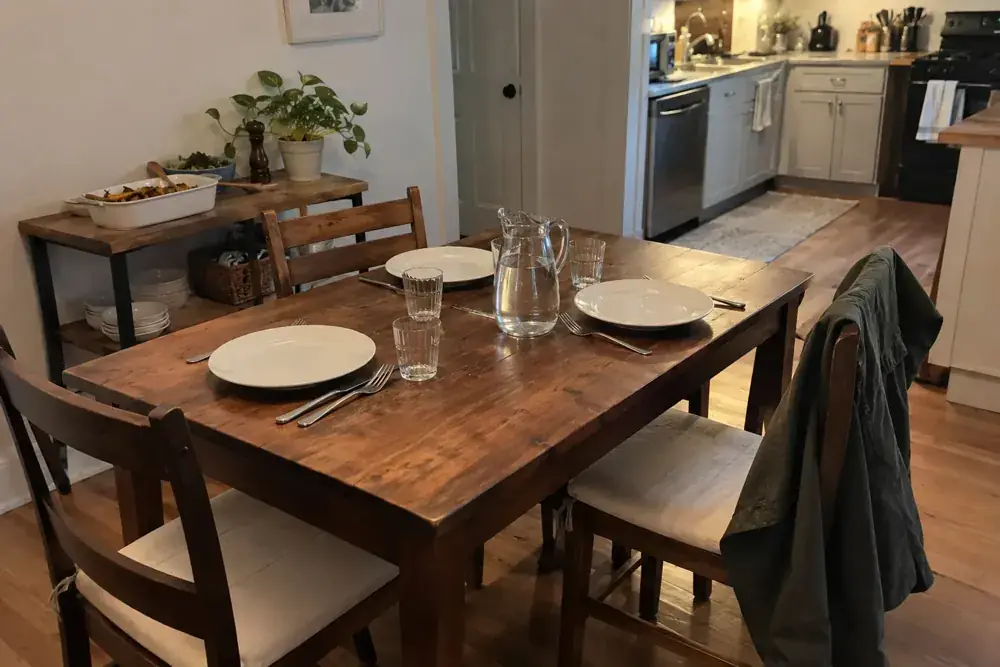
Do a table dry run before cooking: set out a plate, glass, flatware, and serving dish as if everyone were seated. Check whether you can serve food without setting hot platters down on impromptu spots, and whether each person has enough room to eat. This check takes very little time and often reveals that a large platter needs a side table, or that it's better to plate the main dish from the kitchen. It also helps you decide which decorations are unnecessary. If you're using a new recipe, test it another day or scale back the rest of the menu so you don't add uncertainty. A host's confidence doesn't come from everything being flawless, but from knowing the order of tasks and knowing what can be simplified without sacrificing the meal.
Phase-by-phase prep plan
Breaking the dinner down into phases keeps everything from relying on the final fifteen minutes. The following table is a hypothetical example: adapt the timelines to your recipe and schedule.
| Phase | Tasks | Helper |
|---|---|---|
| Days before | Confirm guests, check dietary requirements, and agree on contributions | Host |
| Day before | Make the dessert, sauces, and vegetables that keep well | Host |
| Before guests arrive | Set the table, put out drinks, and prep anything served cold | Host and, if arranged, a guest |
| Upon arrival | Welcome guests, make introductions, and offer a drink | Host |
| Wrapping up | Store leftovers according to guidelines and save the cleanup for later | Anyone who wants to help |
Review the table while planning and once more the night before. If a task doesn't have an owner, assign it or cut it from the menu. To calculate drinks without guessing, see how to calculate drinks for a gathering.
Host without starting a second workday
A glass of water, a drink of the guest's choice, and a spot for their things take care of most arrival needs. You don't need an elaborate appetizer platter if dinner starts shortly. Introduce people who don't know each other with a detail that can start a conversation, without oversharing personal details. A simple shared interest works: a book, a city they've both visited, or an activity they enjoy.
If someone offers to help, give them a specific, quick task instead of always saying it's not necessary. Bringing a platter to the table or pouring water can smooth out the start of the meal. However, don't base the entire dinner on help that wasn't agreed upon beforehand. A guest shouldn't arrive only to find out they have to finish a complex recipe. Spontaneous help is wonderful when it complements a plan that is already under control.
Nurture conversation and accommodate different paces
Seating arrangements can help blend different groups without forcing group dynamics. Make sure anyone who knows fewer people sits next to an attentive neighbor, and avoid separating someone from their support person if they need to stay close. Keep music at a volume that allows for effortless conversation. If one part of the table can't hear, turning down the music is usually more effective than asking everyone to speak louder.
You don't need to moderate every topic, but you can step in if conversation becomes intrusive or humiliating. Shifting the focus with a broad question defuses an uncomfortable situation without sparking an argument. Avoid games that force people to reveal secrets or drink. After the main course, let the group decide whether to stay at the table or move elsewhere. Linger-at-the-table conversation works best when there's no mandatory activity waiting for everyone.
Read more: How to Plan an Adult Birthday Party You’ll Actually Enjoy.
Wrap up smoothly so you'll want to do it again
If you need things to wrap up by a certain time, mention it naturally in the invitation or bring it up when guests arrive. A weeknight dinner can be delightful without running too late. As things wind down, offer coffee or water and help guests gather their belongings. Never pressure anyone to drive after drinking. Store food properly according to food safety guidelines, and leave only the cleanup that can wait without causing issues for later.
The next day, thank everyone for coming and for any contributions they made. If you share a recipe, explain your tweaks so they can recreate it. Note which parts of the menu let you relax and enjoy, and which kept you away from the table. The next dinner can be even simpler. The best sign of good planning isn't a spotless kitchen all night long, but having been able to listen, eat hot food, and share conversation with your friends.
From reading to action
Review your plan before sending invites
Check off what you've already sorted out. This checklist is saved only in this browser, without sending data or creating an account. It is not an app feature.
0 of 7 tasks completed
Before finalizing your plan
Can I buy part of the dinner?
Yes. Combining homemade dishes with store-bought sides or dessert can help you enjoy the gathering. Check ingredients when necessary.
How do I ask for help without burdening my guests?
Ask for a specific contribution before the event or assign a quick task upon arrival. Helping out should complement a plan that's already organized.
How many courses do I need to serve?
There's no set requirement. Prioritize a menu you can comfortably prepare and serve with your available resources, considering what guests expect to eat.
What if someone wants to bring food but the menu is already planned?
Tell them what's missing from the menu and let them choose a simple item they can bring with minimal prep. A short sign-up list avoids duplicates. If you already have everything covered, thank them for offering and suggest they bring something next time.
Sources and helpful reading
Practical guide from the editorial team. Examples are for guidance; adapt decisions and requirements to your event.
- Convite: official product information: Check features and terms for the app on its official website. The checklists on this blog are editorial resources.