A Morning Shared Together
How to host a brunch at home with great flow and minimal cooking on the spot
Updated on 2026-10-16 · content review.
Host a brunch at home with a staged menu, thoughtfully placed drinks, and plenty of time to talk. Includes a checklist to review prep, table setup, and service.

A brunch combines a mid-morning gathering with a meal that can extend toward lunch. To host one at home, define the schedule, a staged menu, and where drinks will be served. That flexibility is appealing, but it can also create confusion: some guests arrive having already eaten breakfast, others expect a full meal, and the host is left trying to serve coffee, eggs, and warm bread all at once. The solution is defining the scope before designing the menu. This guide outlines a comfortable home brunch, featuring preparations that can be staged ahead of time and an invitation that explains what to expect. You don't need to recreate a hotel buffet; a well-planned table and time to talk are often plenty.
Pick a time and explain what you will be serving
The word brunch on its own does not indicate an exact time or an amount of food. Include the start time, approximate duration, and a brief description: "Join us at eleven for savory bites, fruit, and coffee." If there will be a hearty spread, say so; if it's more of a late morning snack, avoid setting a different expectation. That way, guests can plan their breakfast, medication schedules, or other routines without having to guess what they will find.
Decide whether everyone will eat together or if there will be an arrival window. The first format makes it easier to serve a hot dish; the second requires a menu that can handle staggered arrivals with proper food safety. Don't pair an open-ended invitation with a dish that must be eaten the exact minute it leaves the stove. For a fictional gathering of eight people, a half-hour arrival window followed by a served table can be much more manageable than cooking separately for every guest.
How do you translate RSVPs into a menu without overbuying?
Before shopping, categorize guests as invited, confirmed, or pending. A sent message is not the same as a confirmed yes. Nor should you assume a vague "we'll be there" covers an unspecified number of plus-ones. Confirm who is actually coming and what portion of the get-together they will attend; you can then adjust your cooking and space based on clearer information.
| Status | People | Pending decision |
|---|---|---|
| Confirmed | 7 adults and 2 children: 9 in total. | Check seating, ingredients, and serving style for these nine people. |
| No response | 2 people. | Ask for an answer before your chosen cutoff date; do not count them as confirmed attendees. |
| Not attending | 1 person. | Record their response to avoid sending unnecessary reminders. |
These figures illustrate headcounts; they do not dictate portions, appetites, or exact quantities of food. The two pending guests might shift the plan. Decide in advance what you can adjust once they answer, and what simple option you will set aside if they arrive later. You don't need to cook an extra serving of every recipe for every uncertainty: you just need to know which decision is still open.
What message can you send to finalize the list?
An adaptable example could be: "We're meeting Sunday at 11 for brunch at home. There will be savory dishes, fruit, and coffee. To help with the shopping, please let me know by Friday if you can make it and if there are any ingredients we should talk about. If you can't confirm just yet, let me know so I can explain what I'll be able to adjust." Swap in your actual days, times, and menu descriptions. Never invent a fake deadline just to apply pressure.
Asking about ingredients opens the door for a conversation; it does not guarantee that your home kitchen can prevent cross-contamination or adapt every dish. If there are dietary needs, agree on what is practical upfront. It is far better to be honest about limitations before hosting than to promise an option you cannot safely prepare. Do not share guests' personal health details in group messages.
How can you give it a Mexican touch without complicating the service?
You can pick a familiar dish, such as molletes or chilaquiles, depending on what your group enjoys and what you can manage to serve. They aren't mandatory, nor do they constitute a complete menu on their own. Decide what must be heated to order and what garnishes can be set out separately. Serving hot salsa on the side lets people customize their spice level, but it does not make a dish suitable for every dietary restriction.
The brunch guide by Marco Beteta connects budget, guest count, venue, and menu. We don't take its timelines or multi-station requirements as rules for home entertaining. To keep track of responses, our guest list guide helps you track clear attendance statuses. Plan serving and food storage according to each specific dish; this example does not set universal temperatures or holding times.
Build a menu with complementary roles
Think in categories: a main savory dish, something fresh, bread or a similar grain option, and a simple sweet bite. Then adjust to your group's tastes and needs. There is no need to provide multiple versions of each category. Variety should make eating easier, not create a crowded table where every single item requires its own special utensils and no one knows what to pick. Check ingredients and avoid promising an allergen-free environment if you cannot guarantee it.
Choose familiar recipes and map out what gets made the day before, what is finished right before guests arrive, and what requires attention during the gathering. If the last category is too big, simplify. A baked casserole or sheet-pan meal frees up time compared to individual stovetop dishes that demand constant flipping. Food quantities should be based on confirmed RSVPs, party duration, and realistic portion sizes; don't rely on a generic per-person estimate as a guarantee that food won't run out or go to waste.
Read more: How to host a dinner party with friends without spending all night in the kitchen.
Treat drinks as a small standalone service
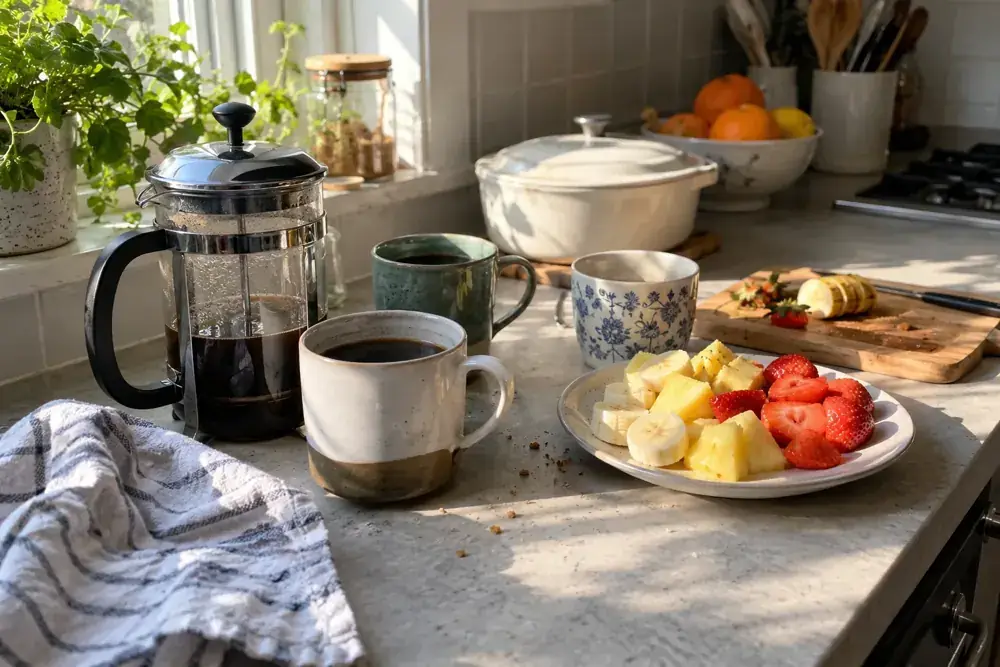
Coffee often becomes the main bottleneck because everyone takes it differently. Check your coffee maker's capacity, brew time, and the number of mugs you have available. You can brew an initial batch and establish a clear self-serve routine for refills, always following manufacturer instructions and food safety guidelines. Have water available from the start, along with a caffeine-free option if it fits the group. You don't need a coffee bar with ten different syrups.
Place spoons, napkins, and necessary condiments nearby without blocking the food station. If you have milk, cream, or other perishables, don't leave them out on the counter for the entire event. A practical drink station lets the host mingle instead of repeatedly answering where everything is kept. If you choose to offer alcohol, provide equally appealing non-alcoholic alternatives and avoid making the toast the sole focal point of the gathering.
A helpful exercise is drawing a timeline starting one hour before guests arrive until the end of the meal. Plot out each dish and highlight those that require active kitchen attention. If two tasks overlap, change the timing or swap the recipe. For example, serving a dish that is already prepared gives you room to brew fresh coffee. It is also wise to have a straightforward plan for late arrivals without leaving all the food exposed to the air. Let late guests know what part of the meal they can join in on, and review how to properly hold aside their portion. Your plan shouldn't punish tardiness, but neither should it force you to restart brunch from scratch: it just needs a practical response that protects the food and respects your time.
Set up a table that lets people serve themselves without waiting in line
Keep plates and flatware away from the most congested spot. Serving platters need their own dedicated utensils and a resting spot. Leave enough room for guests to walk past one another without brushing against someone's chair. If your dining table is small, serve in courses rather than setting everything out at once. A clear, uncluttered table can feel much more welcoming than an elaborate centerpiece that forces people to shuffle items around just to set down a coffee mug.
Consider how guests will eat while seated. Foods that require aggressive cutting or balancing multiple bowls can be awkward if people don't have a solid table surface. If your layout relies on sofa seating, choose finger foods or easy-to-manage dishes, and make sure some sturdy chairs are also available. Decor should support that comfort. Low flower arrangements and reusable accents add warmth without blocking sightlines or hogging valuable serving space. You don't need matching chinaware for the gathering to feel polished and cared for.
Let the morning unfold at an easy pace
Greet guests with a drink and let them know roughly when food will be served. Don't rush to serve the second they walk through the door while they are still putting down coats and bags, but don't leave them waiting without any idea of the plan either. Low background music and brief introductions among guests who don't know each other are usually all it takes to break the ice. Brunch doesn't require games or a structured program. If you want to add an activity, make it strictly optional, such as swapping book recommendations or sharing a recipe.
Avoid stacking chores that force you to jump up from the table every few minutes. Before sitting down, double-check the water, napkins, utensils, and the next step in the meal. If someone offers to help, give them a specific, simple task: carrying a platter or bringing over extra mugs. Don't turn casual goodwill into an exhausting kitchen shift. The entire point of staging your prep is so you can sit and eat with your guests, not leave them managing an overly ambitious menu on your behalf.
Read more: How to host a comfortable, pressure-free baby shower.
Plan for leftovers and wrapping up the gathering
Check food storage recommendations for each dish and refrigerate perishables at the appropriate time, without waiting for a lingering table conversation to end. Keep containers handy if you plan to send leftovers home, and make sure safe transport is feasible. Don't assume every leftover can be kept: it depends on the ingredients, exposure time, and ambient conditions. If a food safety question arises, follow manufacturer guidelines or official food safety resources.
Communicating an approximate end time helps guests who have afternoon commitments. You can gently wind things down by offering a final round of coffee without making anyone feel rushed out the door. Afterwards, take note of which dishes were a hit and which caused too much hassle. For your next brunch, keep the ideas that sparked conversation and cut out anything that merely added stress. The memory of a lovely morning usually comes down to good company and an easy pace, not executing a restaurant-grade buffet.
From reading to action
Review your plan before sending invites
Check off what you've already sorted out. This checklist is saved only in this browser, without sending data or creating an account. It is not an app feature.
0 of 7 tasks completed
Before finalizing your plan
What time should a brunch start?
There is no single correct time. Pick an hour that works for your crowd and specify whether it will be a full meal or light bites so everyone can plan their day.
Do I need to cook individual dishes to order?
No. Familiar recipes that can be prepped in stages make it much easier to enjoy the meal together. Choose dishes suited to your kitchen setup and safe food storage conditions.
How do I avoid spending the whole time pouring coffee?
Check the brew capacity and timing of your equipment, lay out mugs and fixings, and create a clearly labeled drink station that doesn't block the food line.
Sources and helpful reading
Practical guide from the editorial team. Examples are for guidance; adapt decisions and requirements to your event.
- Convite: official product information: Check features and terms for the app on its official website. The checklists on this blog are editorial resources.