
A welcoming community
How to Host a Community Gathering That Welcomes Newcomers
Set up a community gathering that warmly welcomes newcomers. Define purpose, social time, and participation, with clear agreements and a useful next step.

A community gathering can bring together neighbors, people with a shared interest, or project collaborators. Its challenge isn't just bringing together those who already know each other: it must also offer an accessible entry point for first-timers. This guide outlines a meeting with a clear purpose, straightforward community guidelines, and real opportunities to participate. It doesn't assume that every community needs to grow or that every attendee must take on a responsibility. The goal is to create a space where people understand why they are there, how they can get involved, and what will happen after the gathering.
Define the purpose of this particular gathering
A community can have many interests, but each meeting needs a focus. It might serve to get acquainted, exchange experiences, present a project, or decide on a next step. Avoid mixing too many objectives into a single invite. If a formal decision will be made, explain who can participate and what procedure will be used in accordance with group rules. Do not present an open conversation as though it already authorizes commitments on behalf of everyone.
Write a brief description that an outsider can understand. Eliminate unexplained acronyms, inside jokes, and references to conversations that aren't publicly available. State whether prior experience is required or if the gathering is introductory. Clarity helps each person gauge their interest, rather than arriving only to discover the format was different. It also allows organizers to choose activities that genuinely support the stated purpose.
Prepare a welcome that doesn't depend on knowing someone
Designate a person to welcome attendees and explain the basics: where to leave belongings, where to sit, how the program works, and whom to ask with questions. Don't assume a sign with the group's name is enough. If you use name tags, let each person choose how they want to introduce themselves and avoid asking for information you don't need. A preferred first name can be plenty for conversation; last name, company, or job title aren't always necessary.
Think about those arriving alone. A brief introduction to another person can ease integration, provided it doesn't put them on the spot or force them into the spotlight. You can offer a dedicated table for newcomers or explain that it's normal not to know anyone. Avoid asking each person to share an intimate story in front of the group as an entry requirement. Trust is built through choices and consistent treatment, not forced icebreakers.
Read more: How to Run an In-Person Workshop That Leaves Lasting Value.
Agree on community guidelines that can actually be enforced
A few clear rules are more useful than a lengthy statement no one knows how to apply. They might include listening without interrupting, respecting personal boundaries, and not sharing details or photos without permission. Explain who will handle an uncomfortable situation and how to contact them. Don't promise an entirely conflict-free environment; commit to a concrete procedure and a responsible response within the group's capabilities.
If the community has a code of conduct, share it before the gathering and make sure organizers are familiar with it. Don't improvise sanctions or use the meeting to publicly debate a personal complaint. Sensitive situations require appropriate handling and designated responsible people. For open gatherings, review access conditions and incident response protocols with the venue. Hospitality includes knowing when to seek specialized support instead of trying to resolve everything among volunteers.
A helpful exercise is imagining someone who arrives ten minutes late. Can they grasp the topic without interrupting everyone? Can they find a seat and know whom to ask? Prepare a discreet way to catch them up, such as a quick summary from the welcome desk. If the gathering requires punctuality for a specific activity, explain that reason beforehand. Also consider someone who needs to leave early: they could leave an idea in writing or find out how to view the summary. These small decisions prevent participation from dividing between those who know every group custom and those still learning to navigate it. The community becomes easier to understand when its rules don't rely on guesswork.
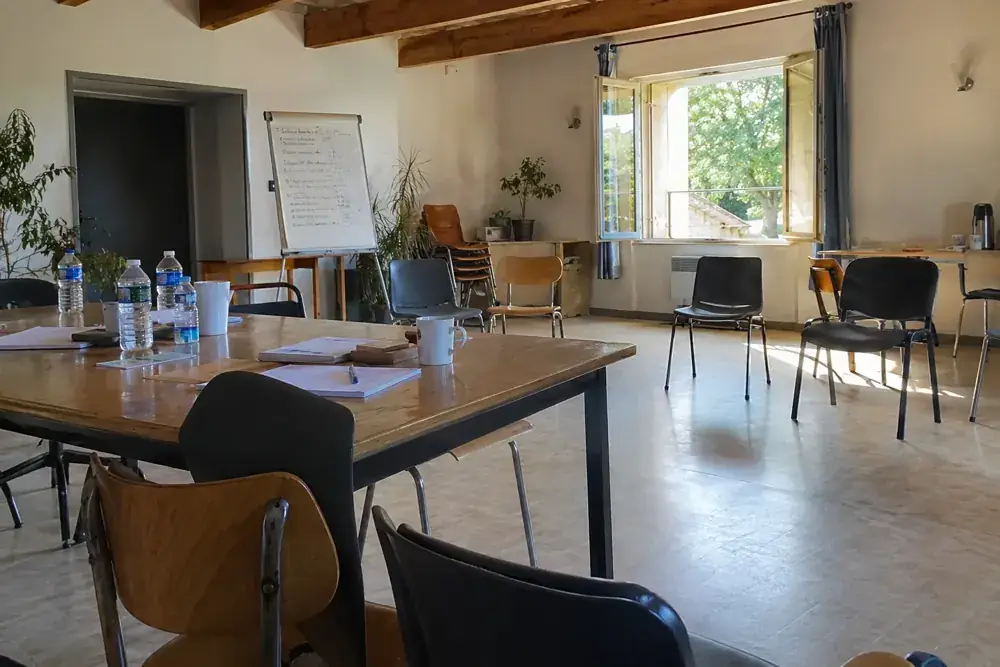
Design participation with varying levels of involvement
Combine a group session with small-group discussions if the purpose allows. Some people think better by listening; others need a specific question to get started. You can offer a written option to contribute ideas and the choice to pass. If the gathering includes a working session, explain what will be done with the input. Asking for opinions without clarifying where they lead can create expectations the group cannot ultimately meet.
Prevent the same voices from dominating the room. Simple facilitation can manage time and keep to the topic without turning the conversation into an interrogation. If someone raises a different topic, note it down for another time or indicate who can follow up on it. Do not accept tasks on behalf of people who aren't there. A useful commitment requires a volunteer owner, defined scope, and agreed-upon date; a wish list without those elements is not an action plan.
Coordinate access and communication thoughtfully
Share the venue, schedule, duration, cost if any, and relevant conditions. Verify pathways and provide a contact for accessibility needs. If the group uses a digital platform, explain what it's for and let people decide if they want to join. Do not automatically add attendees to messaging lists or groups simply because they showed up once. Attending a gathering does not equal giving permission to receive ongoing communications.
If you keep a sign-in sheet, collect only what is necessary for organizing and restrict access to it. Do not publish an attendee list by default. For photography, explain the intended use and respect anyone who does not want to appear. You can set aside a specific time or zone for voluntary photos. The community does not need to turn every gathering into promotional material to prove it exists. A respectful experience can build more trust than an extensive gallery without clear consent.
Read more: How to organize a welcome gathering for someone who just moved.
Leave a small, realistic next step
When wrapping up, summarize what was discussed, distinguishing ideas, decisions, and confirmed action items. Do not announce something as an agreement if it was only proposed by one person. If there will be another meeting, explain how it will be announced and what details are needed to receive notifications. Anyone who only wanted to attend this once should be able to leave without taking on a role. Also thank those who listened or helped out in less visible ways.
Afterward, share a summary through the authorized channel and follow through on organizing commitments. Review what made arrival easier for newcomers and where confusion occurred. You can ask whether the purpose was clear and if they found a comfortable way to participate. Do not measure success solely by attendance numbers. A small gathering that produces meaningful connections and sustainable agreements can be more valuable than a packed room where no one knows how to return or what was expected of their presence.
From reading to action
Review your plan before sending invites
Check off what you've already sorted out. This checklist is saved only in this browser, without sending data or creating an account. It is not an app feature.
0 of 7 tasks completed
Before finalizing your plan
How do I support someone arriving without knowing anyone?
Prepare a welcome that explains the agenda and offers a brief introduction to someone else. Avoid forcing them to share personal stories in front of the entire group.
Can I add attendees to the group chat?
Ask for permission and explain how it will be used. Attending once does not imply consent for ongoing communications or the sharing of contact details.
What should the final summary include?
Separate shared ideas, decisions actually made, and accepted tasks with their designated owner. Do not turn individual proposals into agreements of the entire community.
Sources and helpful reading
Practical guide from the editorial team. Examples are for guidance; adapt decisions and requirements to your event.
- Convite: official product information: Check features and terms for the app on its official website. The checklists on this blog are editorial resources.
- W3C WAI: Accessible Events Planning: Supplemental primary resource on accessibility; the examples and practical decisions in this guide are editorial suggestions.